Whiteley Creek Homestead

LIFE AT THE END OF A DIRT ROAD IN CENTRAL MINNESOTA

organically grown triticale in our field
canoeing in our wetlands
raspberries growing wild on our property
our back porch fieldstone fireplace
  • Oh gosh. Could one person be capable of this degree of happiness? Today. It is so. I received a long-awaited parcel. Truthfully, the wait hasn't been long considering its journey. Shipped from Australia 14th December 2021. Arrived central Minnesota USA 1st January 2022. Yenara, who is the potter at YenCeramics, carefully wrapped each item to assure safe arrival, tying each parcel so prettily with string, and kindly included a postcard photo of herself…and her hands. Lovingly encircling tiny bowls. One of which I purchased to hold my used teabag, after steeping tea to drink from the black and white "dimple cup," which is the third item in my shipment. Its style invites one to encircle the cup with both hands to feel the beverage's warmth inside. Yen's listing describes it as a "hug mug." 
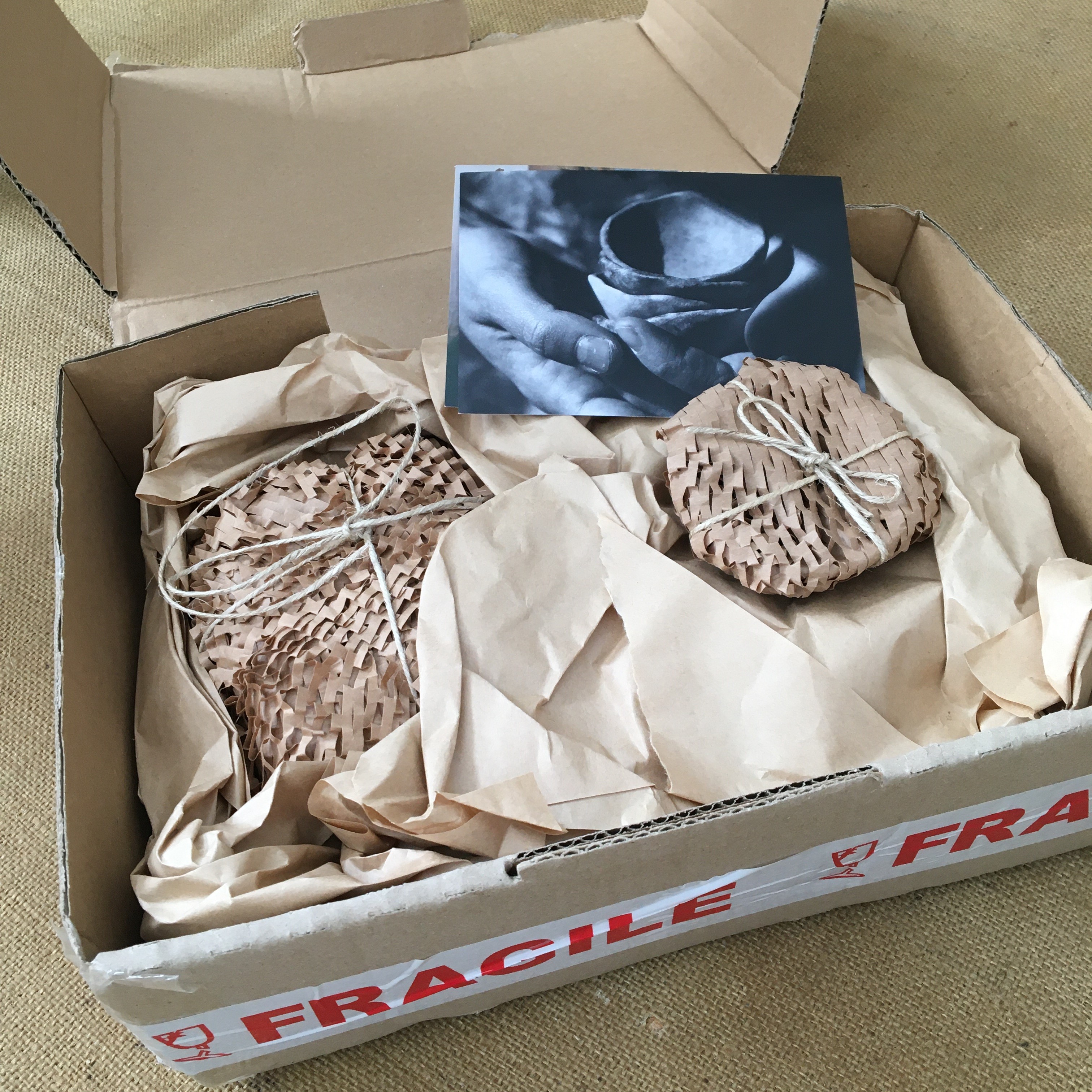
    Pit fired bowls packaging Pit fired bowls

    On her Etsy shop, Yen explained that "a pit fire of timber shavings, bark, leaves, coffee grounds and other organic materials from the property where which the studio is situated creates stunning markings across pieces." My bowl's beautiful random patterns, rugged edges, and warm earthy tones begged to be a vessel for hearty porridge. I decided upon Pompanoosuc Porridge, which I first tasted for breakfast at the beautifully rustic cafe at King Arthur Flour Headquarters in Norwich, Vermont the morning after taking a bread baking class there with my granddaughter. It is a blend of steel cut oats (or Scottish oats which are quite finely ground versus cut), whole wheat bulgur, and flax seeds. But. My porridge morphed. Into a mix of steel cut oats, red bulgur wheat, millet, pearled farro, amaranth, and wild rice…1/2 dry cup each. And lots of water for cooking to softness. Leftovers for many breakfasts. Hulled buckwheat, quinoa, and teff would be perfect additions, too. 

    Pompanoosuc porridge Porridge toppings

    Then there are the toppings, which I selected for their earthy tones. Dried white mulberries, figs, Montmorency cherries and pistachios for their hand-painted colors. A diced apple, Milk. A drizzle of maple syrup. In my bowl, created far away in Australia. Because of the hands that gently formed it, I may nourish my body and soul. Be it porridge or soup. 
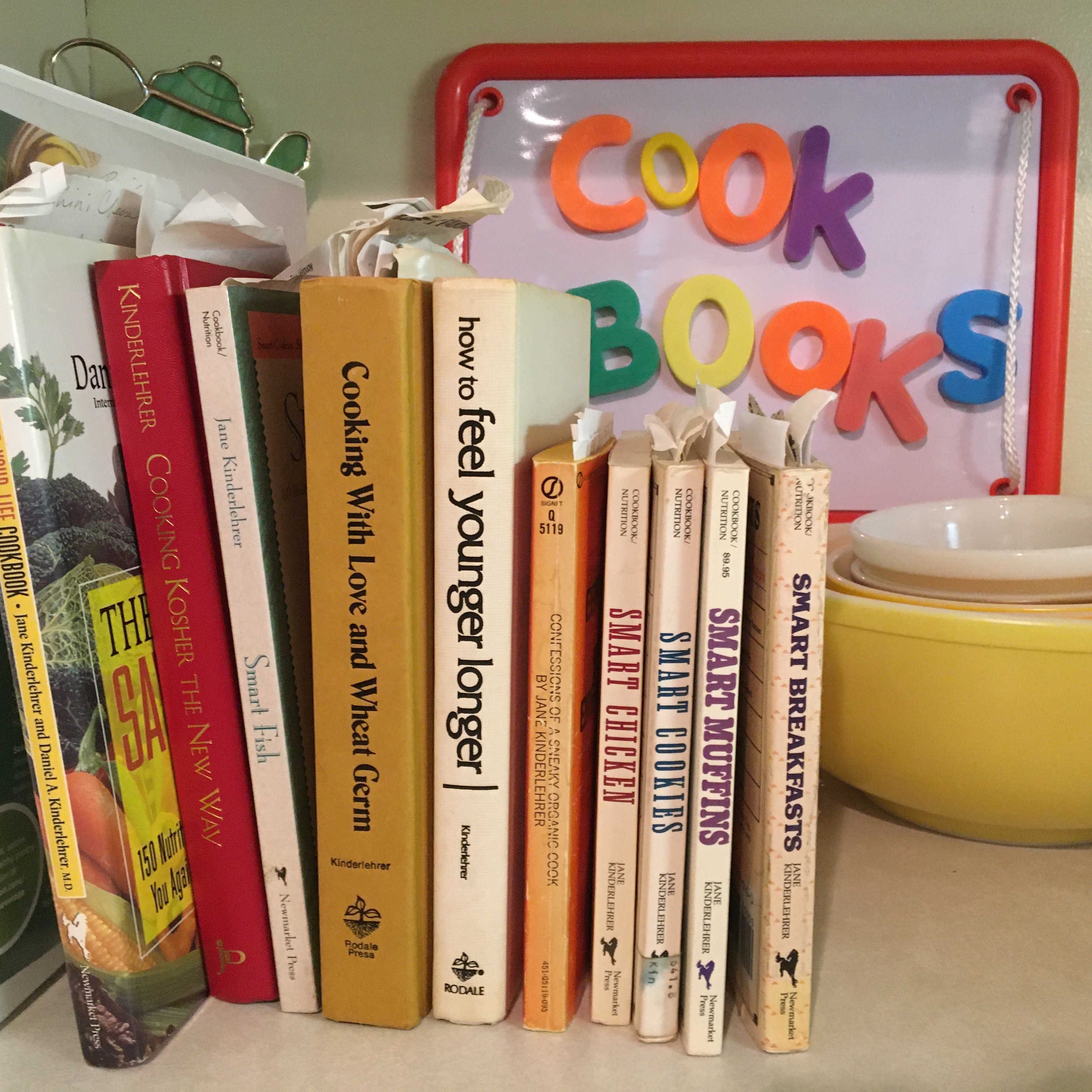
  • In the 1930s, J. I. Rodale started the first organic farm in the U.S. then founded Rodale Press Publishing Company as a vehicle to share his organic farming methods. Since the 1970s, I have had a subscription to Organic Gardening and also Prevention Magazine which are both published by Rodale Press. Jane Kinderlehrer held the position of Rodale Press senior editor then Prevention Magazine's food editor. However, her name would not become permanently embedded into my soul until I purchased two of her cookbooks titled Smart Cookies (copyright 1985) and Smart Muffins (copyright 1987). 

    Jane kinderlehrer cookbooksJane kinderlehrer tribute

    The first recipe that I chose to make was Hearty Pear and Pecan Muffins. It has remained a favorite never-fail go-to over the years. My granddaughter O and I together made the muffins when she was a couple years old. (As a time passage frame of reference, she will begin her high school senior year at September's beginning…in the UK as a study abroad student.) One of my favorite framed collages is of Jane proudly smiling in my granddaughter O's direction as she scoops the pear muffin batter into a pan. She is/was a vocal proponent of encouraging a deeply rooted healthy eating foundation in children that would carry over into adulthood.

    Over the years, I have collected all of Jane's cookbooks published from 1971 (Confessions of a Sneaky Cook) through 2002 (The Smart Baking Cookbook: Muffins, Cookies, Biscuits and Breads). One of the books titled The Antioxidant Save-Your-Life Cookbook is coauthored by her son Daniel A. Kinderlehrer, M.D. who is an "internist and expert in diet, nutrition, and holistic medicine." I have decided to more intently and purposefully traverse this book collection to glean knowledge and build my tried and true nutritional powerhouse recipes from those held within the books' pages. In doing so, I will honor the life of Jane Kinderlehrer and her dedication to promoting wellness.

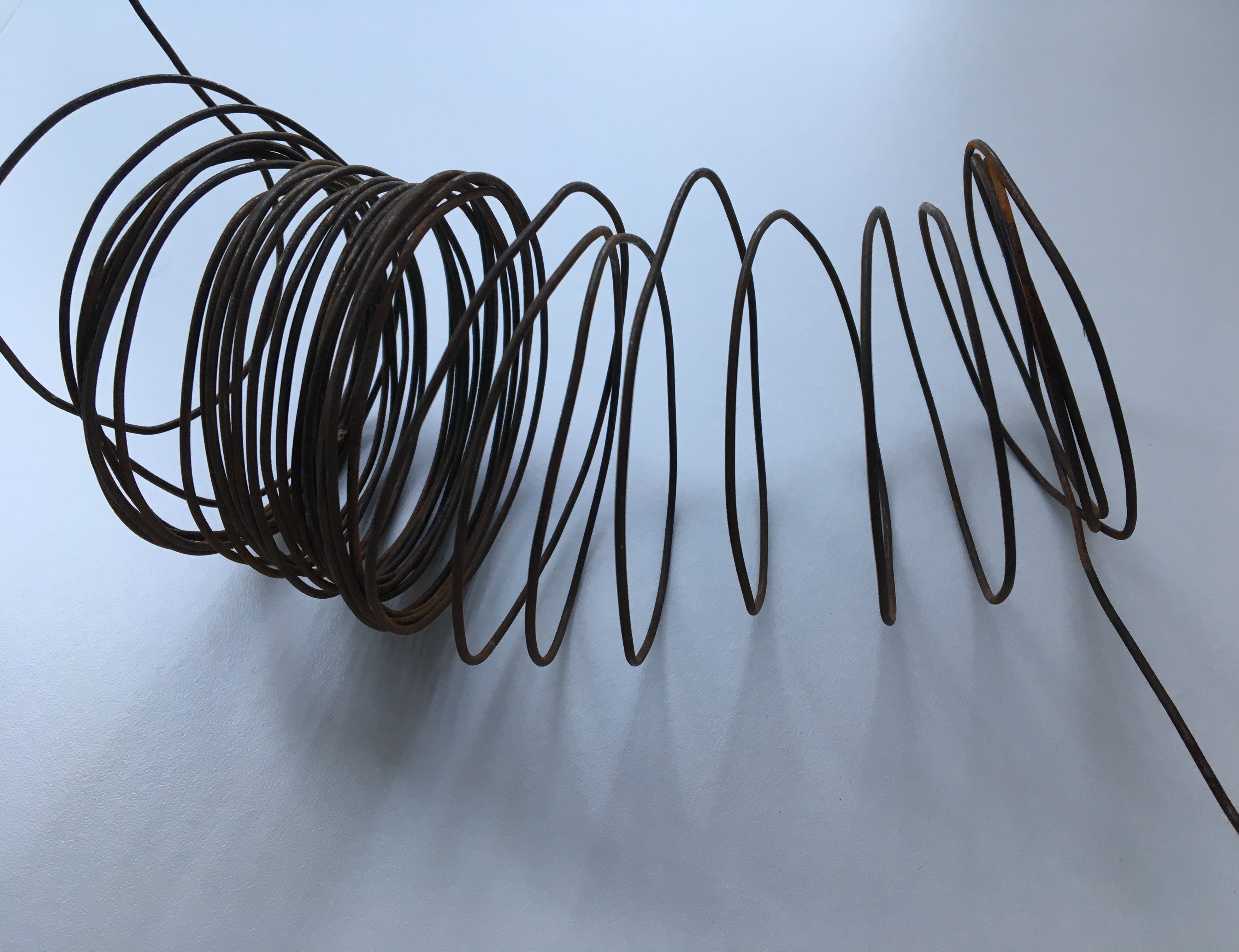
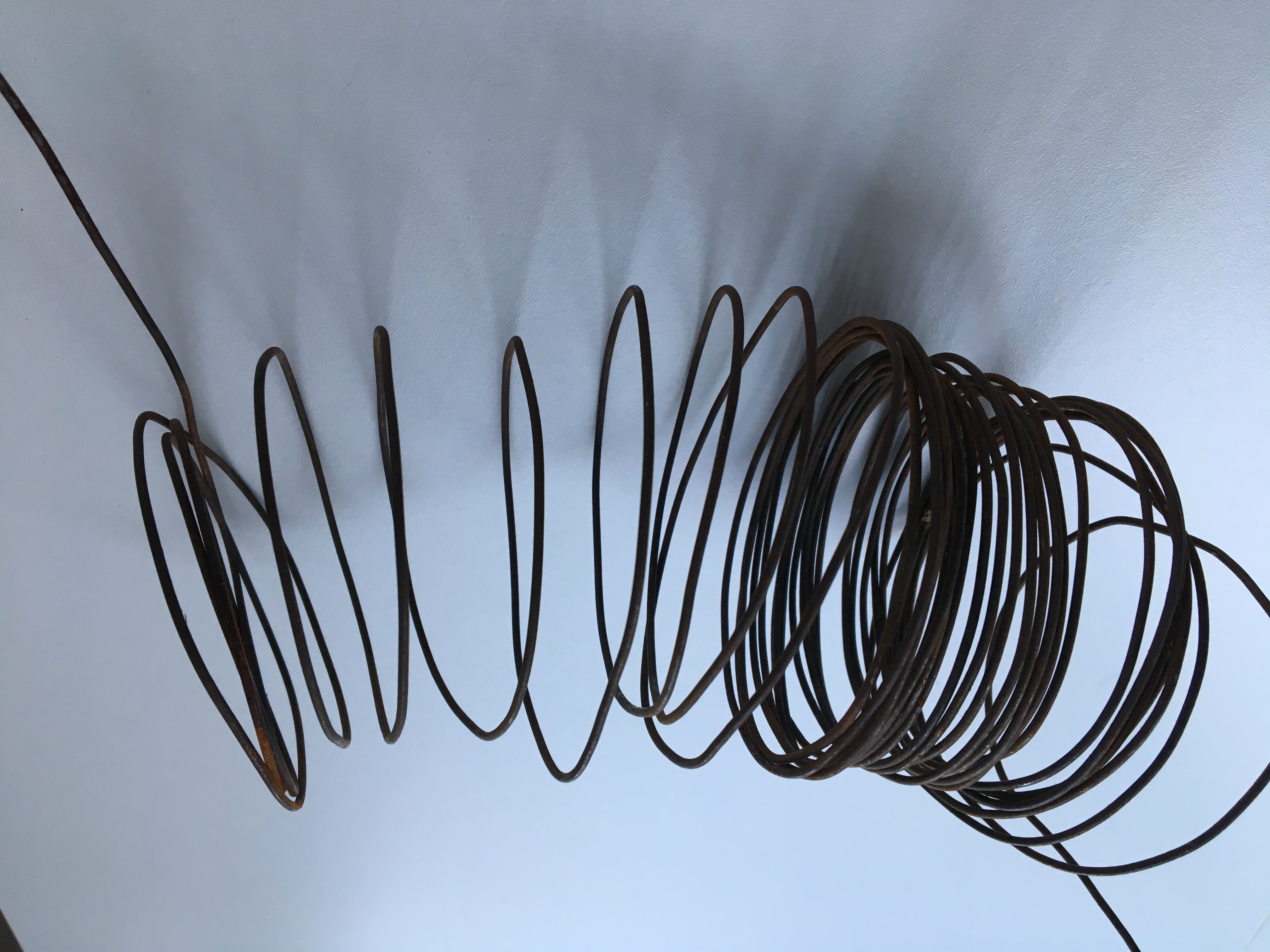
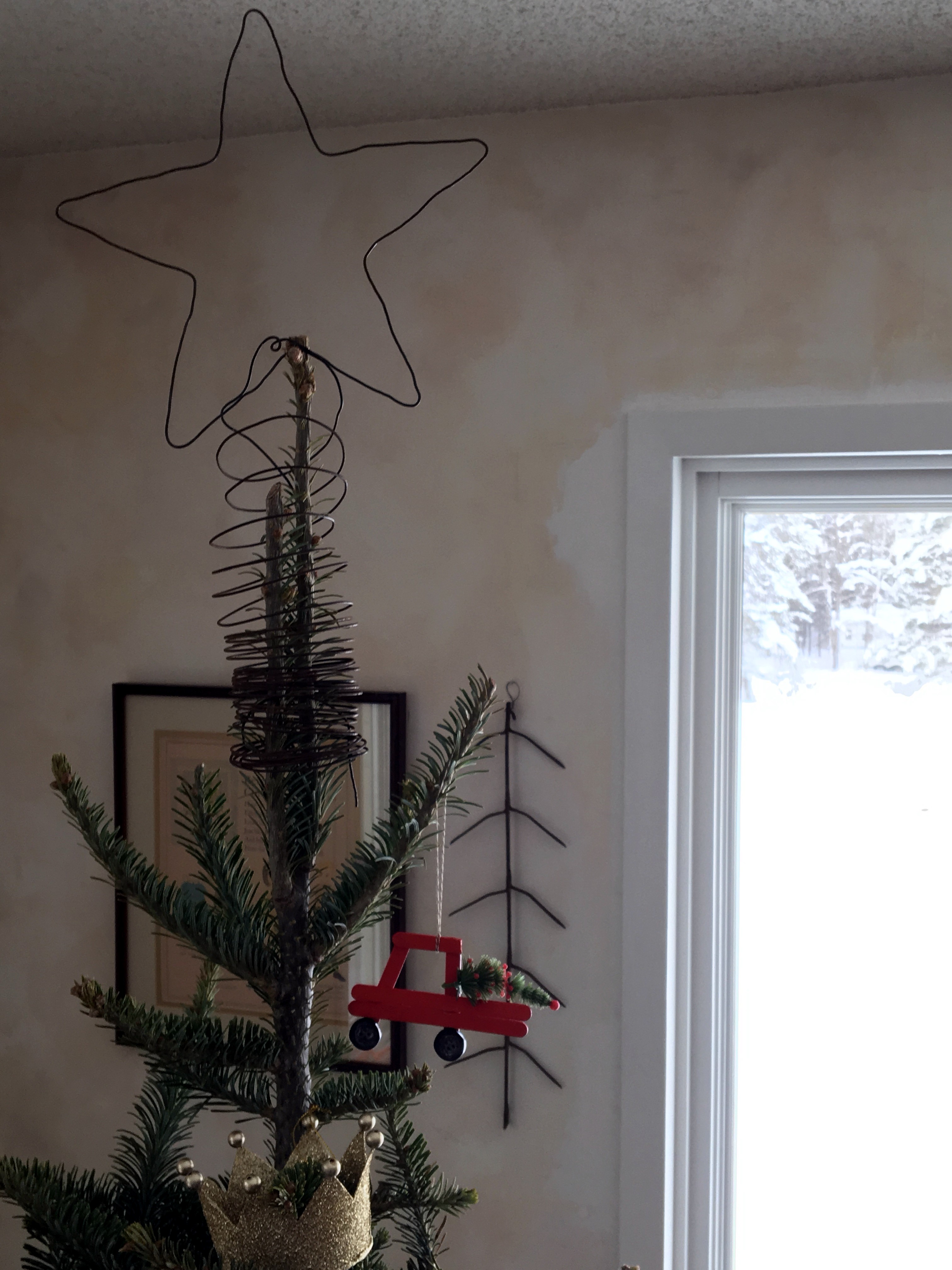
  • I had a coil of wire. Like a Slinky but not. For years, there it was. Housed in a small box alongside my tool box. I knew not its intended purpose nor what I might do with it one day. Until this year's Christmas. I was sure that a star atop our tree felt right. But not just any star. It must be one befitting of a King who was to be born into this world within a setting absent of grandeur and fanfare. The star would represent our Saviour's humble beginnings and sit in a place of honor upon the most coveted uppermost branches. It was a search for inspiration that led me to FOOD52's online shop. There, you will find a beautiful hand-crafted wire star tree topper that I patterned mine after. We cannot create everything. This may be one of those times that you allow someone else to make it for you and feel the joy when it arrives on your doorstep ready to hang upon your tree. When I checked today, the original price was $32.00 and now on sale for $25.60. But, if you so desire to construct your own, this is how I made my star.

    Wire tree top slinky coilWire tree top star pattern with measurement yarn

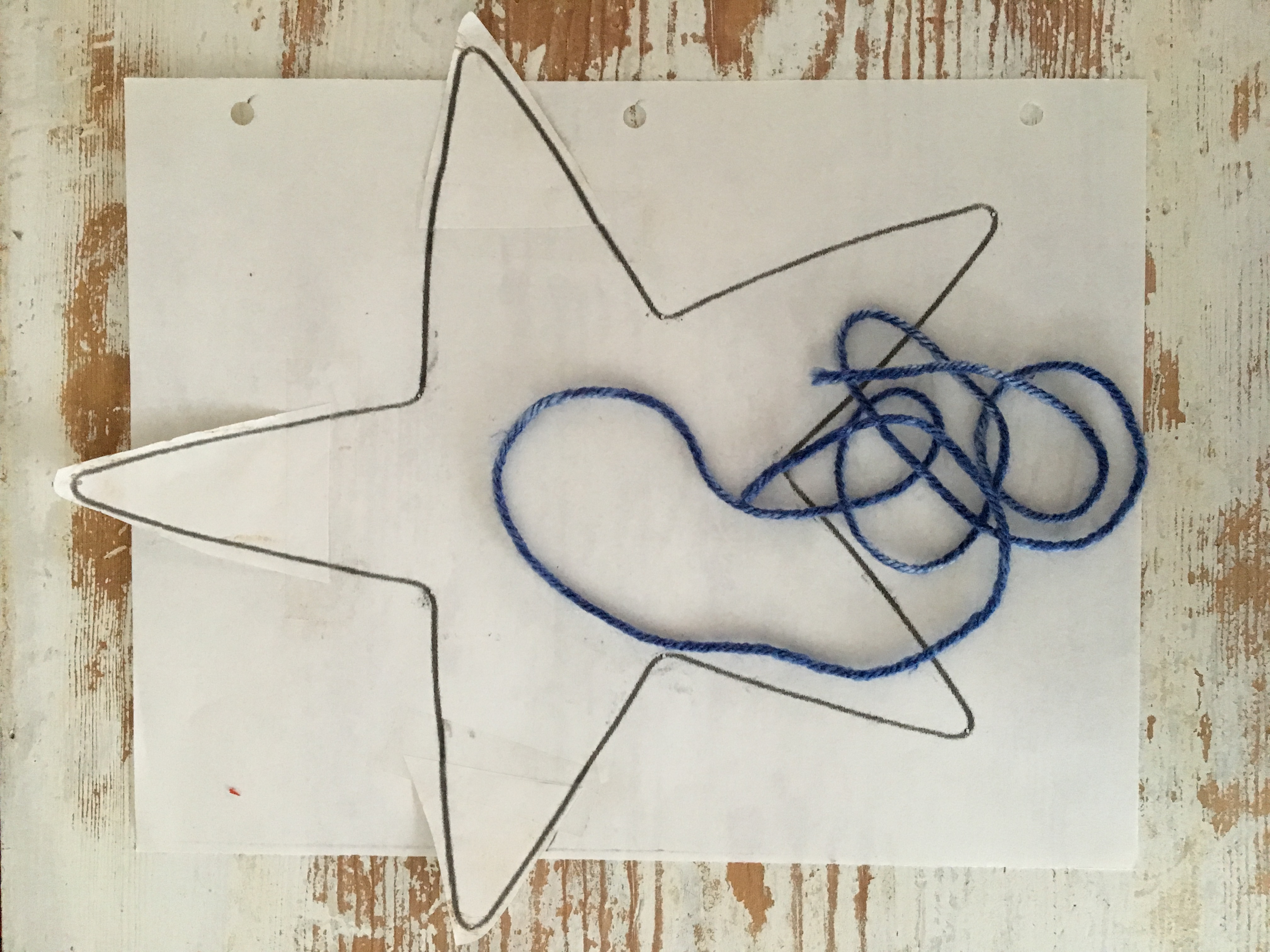
    First, determine the star's desired dimensions, then draw the shape onto a piece of paper. Next, lay yarn around the star's perimeter to calculate the length of wire to straighten at one end of the coil .

    Wire tree top star pattern with wire Wire tree top star

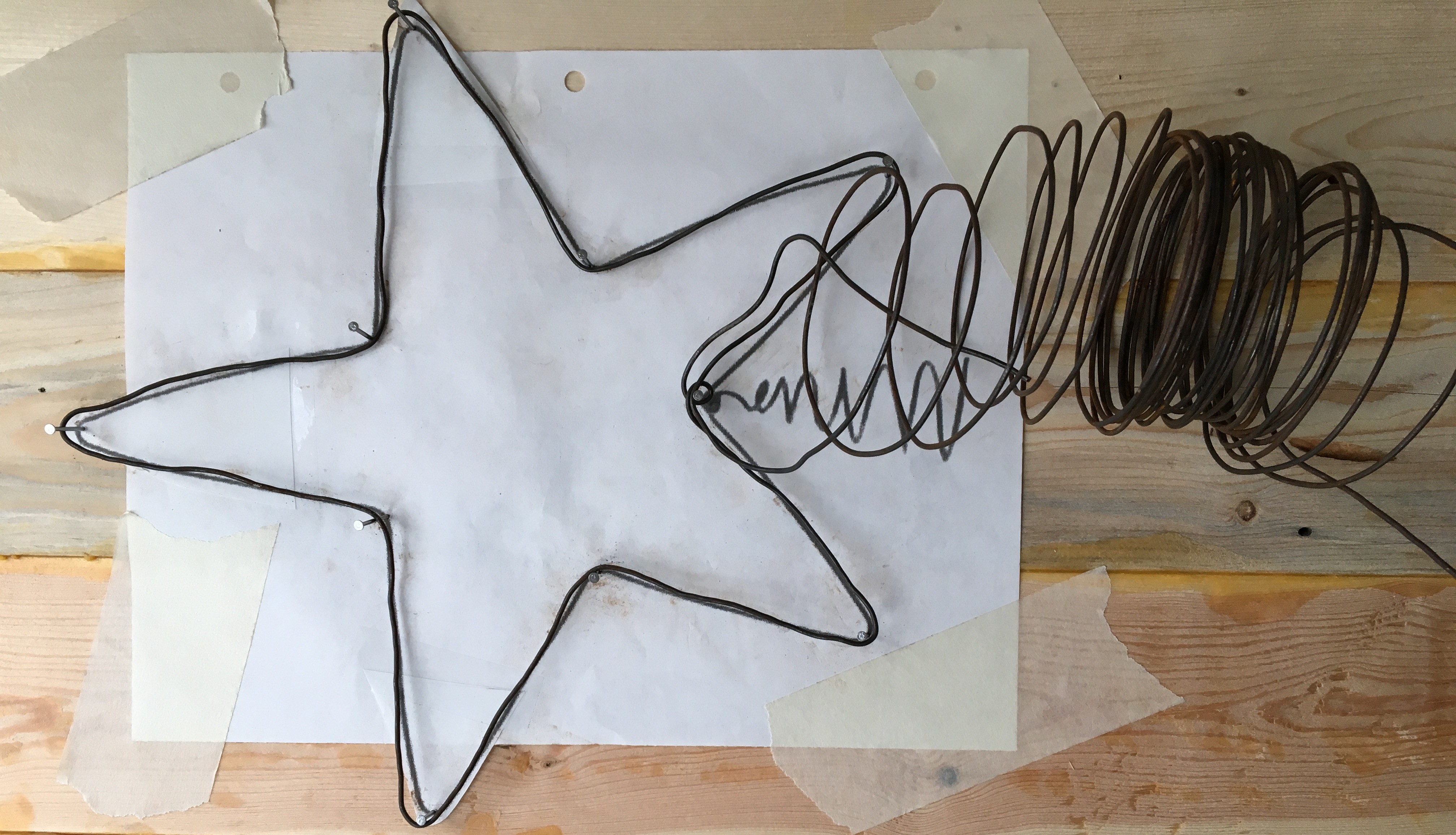
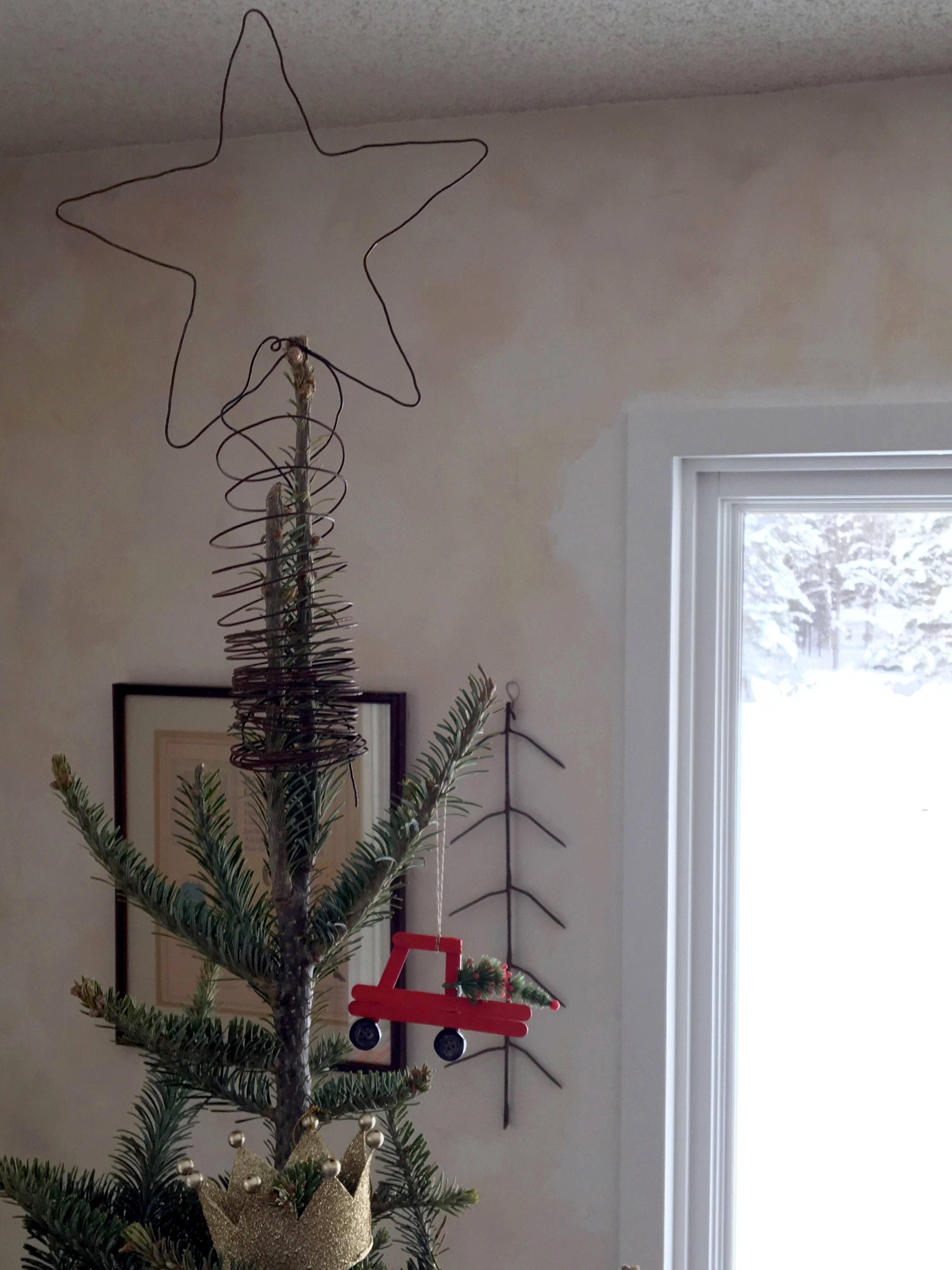
    Tape the star onto a board scrap then pound a nail into each corner of the star. Begin wrapping wire around the nail at the star's lower center. Working your way around the star, continue wrapping around each nail until your journey brings you back to where it all began. Secure with a simple twist. Rather than utilizing a frame, you can free-form your star, too. However, the simple and rapid frame construction makes winding the wire a breeze. Remove the star shape from its frame and hang upon the tree. Adjust the coils so they rest comfortably one upon the next. Sweet.

  • Yesterday, I took a monoprinting class at The Crossing Arts Alliance in downtown Brainerd (Minnesota). "Monoprinting is a form of printmaking that has lines or images that can only be made once, unlike most printmaking, which allows for multiple originals." To print shapes, words, lines, etc on paper, the instructor provided a wide variety of materials to spawn creativity like purchased and handcut stencils as well as items commonly found around the house such as bubble wrap, string, cheesecloth, non-slip shelf-liner, wooden skewers, lace, etc, etc.

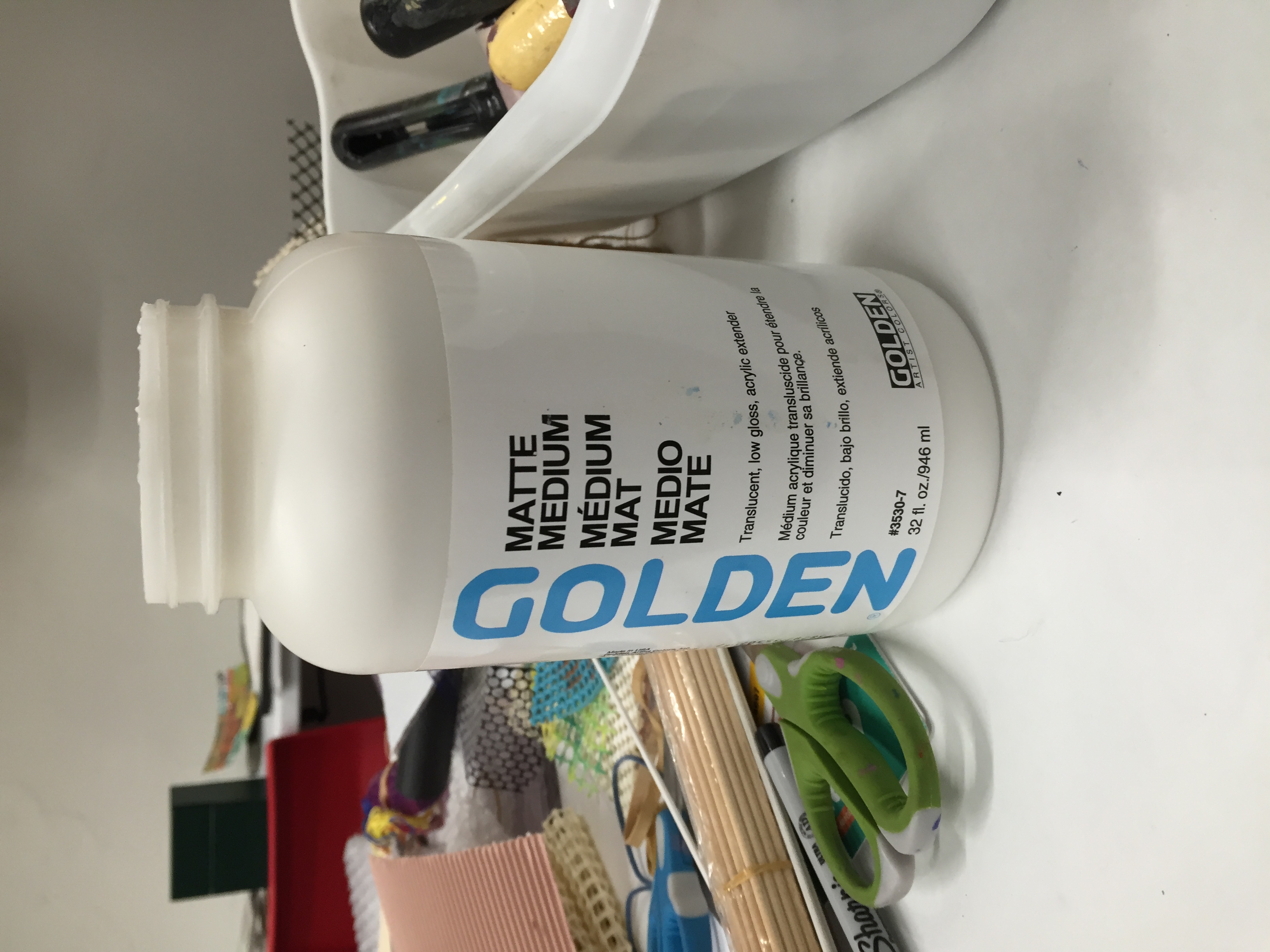
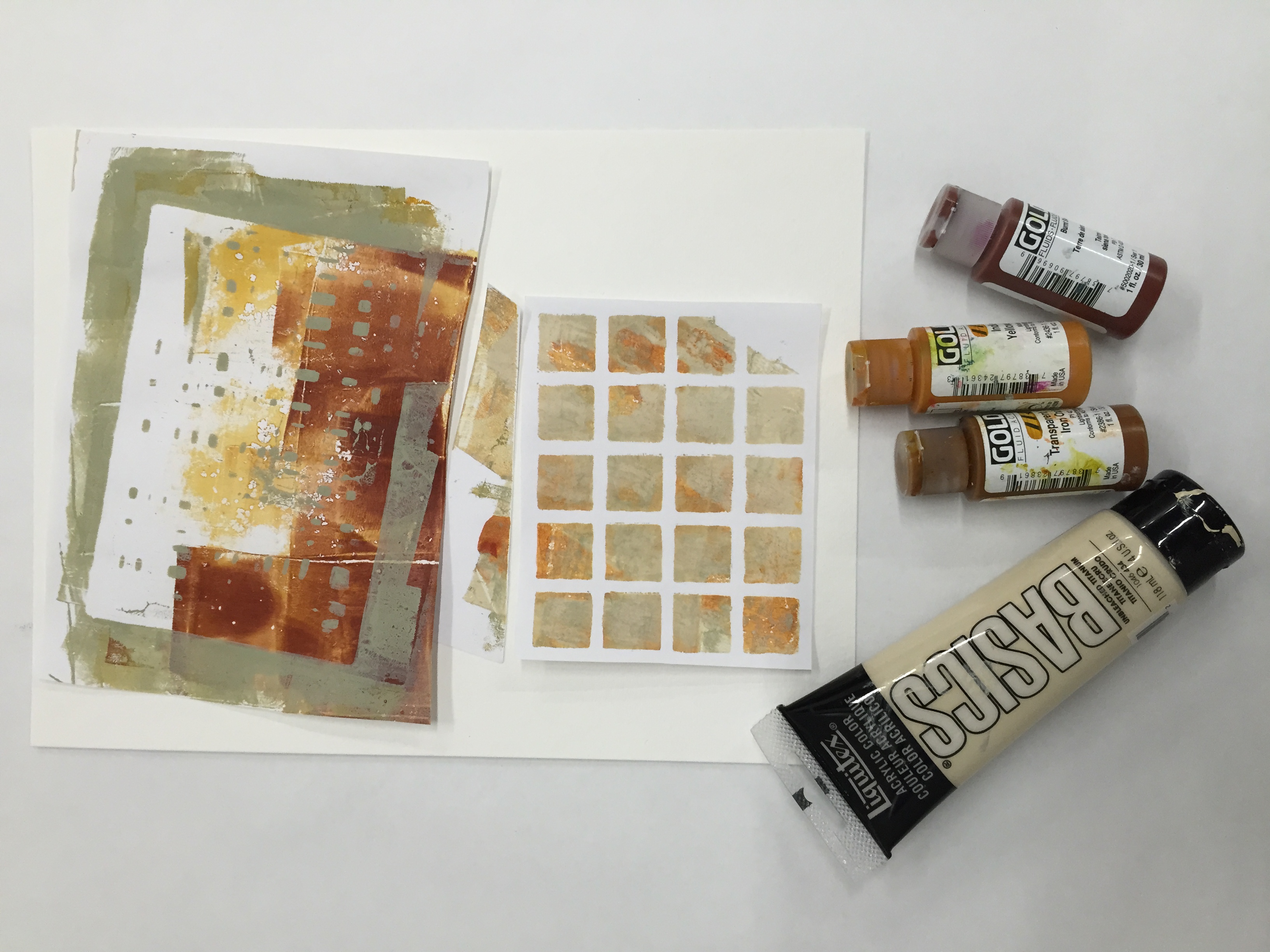
    Monoprinting class supplies Monoprinting matte medium

    This is how we did it: 1) With a brayer, roll desired color(s) of paint onto GEL Press printing plate. 2) Over the paint, lay down item(s) selected to produce a pattern (i.e., stencil, string) 3) Set printer copy paper atop. Press and smooth your hand (or use a tool for burnishing paper) across paper's surface. 4) Slowly remove paper. *If you want to create a layered effect, repeat steps with a different paint color and stencil but use the same paper. Note: Although monoprinting technically means one print, if you press a second and sometimes third piece of paper onto the gel printing press, you can get a lighter print. Or, you can create a "ghost" print by removing the stencil and pressing down a piece of paper.

    Monoprinting city farm draft collage Monoprinting now

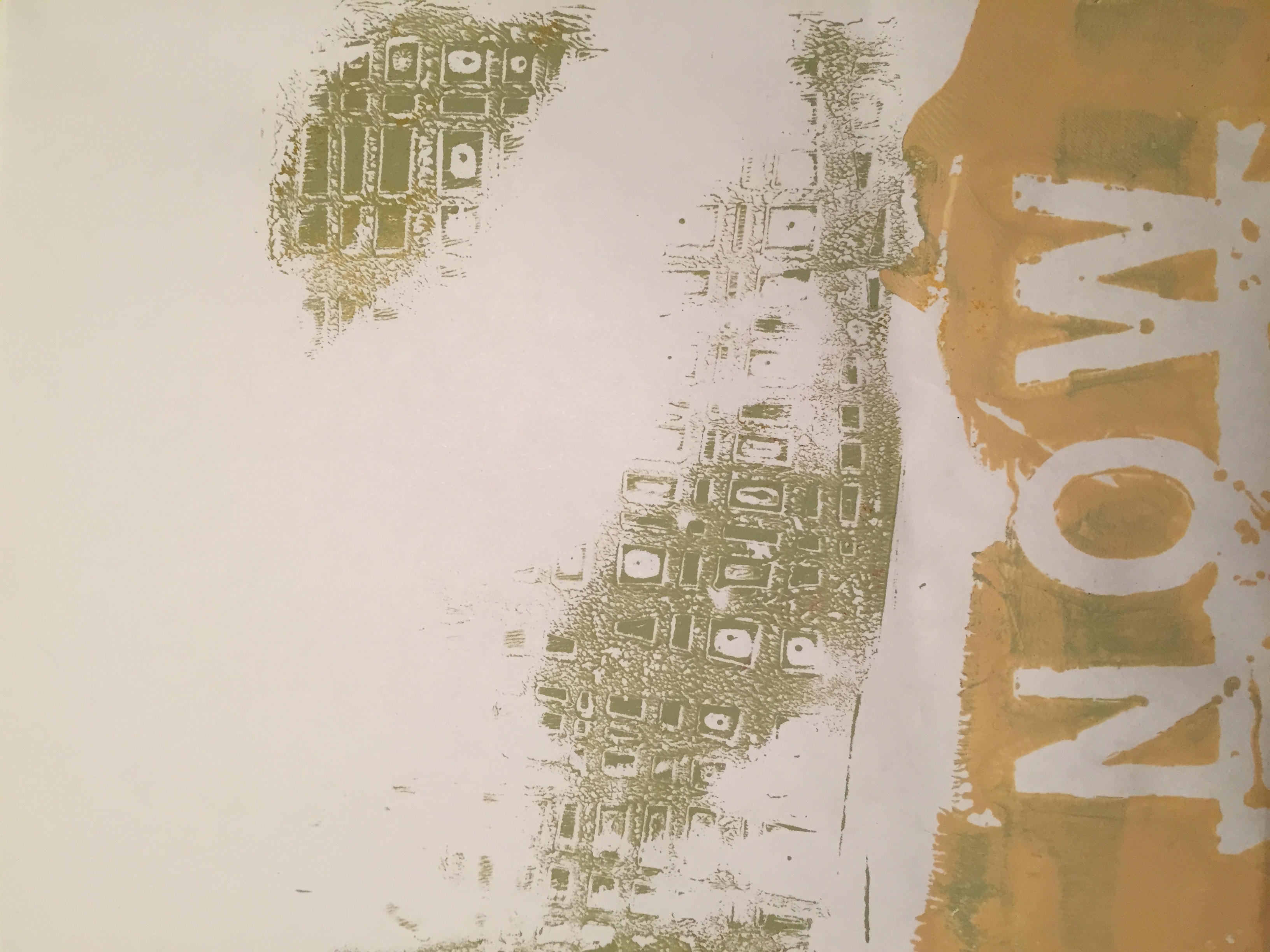
    During independent work time, we made a variety of patterned prints then chose ones to create a collage. Upon spreading out the prints on my work table, three different papers stood out instantly. In my mind's eye, they immediately formed a contrasting bond…a cityscape, a barn and silo, and a field. My collage is not yet finished, as I will mount the prints on watercolor paper then coat them with matte or gloss medium (i.e. Golden brand or Mod Podge), and/or secure them behind framed glass, or make copies to create greeting cards. In addition, I may paint the watercolor paper background, add ink pen drawings  or writing to my collage, or add another stencil layer, but the photo I am sharing is what I finished in class. For the collage on the left, I created the chunky "buildings" in my cityscape by rolling paint across the gel press with the brayer but I didn't entirely cover it. I pressed down a sheet of paper on top of the painted gel press, then removed and allowed it to dry. Meanwhile, you can wash the gel press to remove its paint or, instead, I rolled a second color directly over top of the previous paint. After coating it with the different color, I set a grid-pattern stencil down, pressed the previous paper over top, then removed to dry. For the print on the right, I used two metal stencils. I placed the word "now" underneath what I envisioned to be an old building in a city's warehouse district. You know, the industrial buildings that are being renovated into apartment buildings, restaurants, and shops across the country. The former grandeur and strength of what I see NOW as a "crumbling building" can be seen. That's the intrigue of the monoprinting process. Going in, the end result is uncertain.

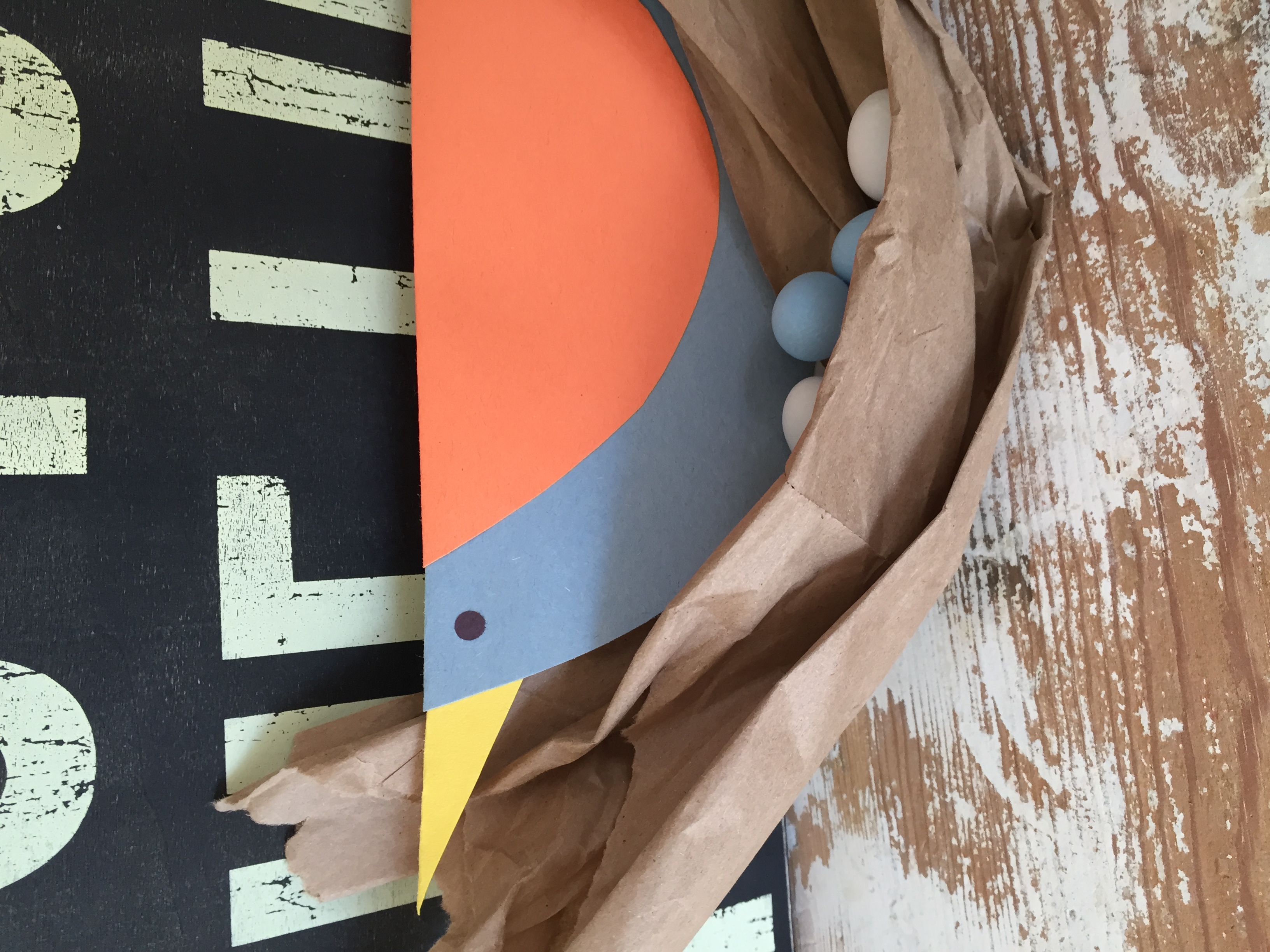
  • Looking for a a sweet spring craft that can be easily transitioned into an Easter basket? For bird assembly, I extend grateful thanks to the creator of an instructional video titled "Paper Crafts for Kids – How to Make Paper Bird (Very Easy)" https://www.youtube.com/watch?v=5n64xhcD_wg 

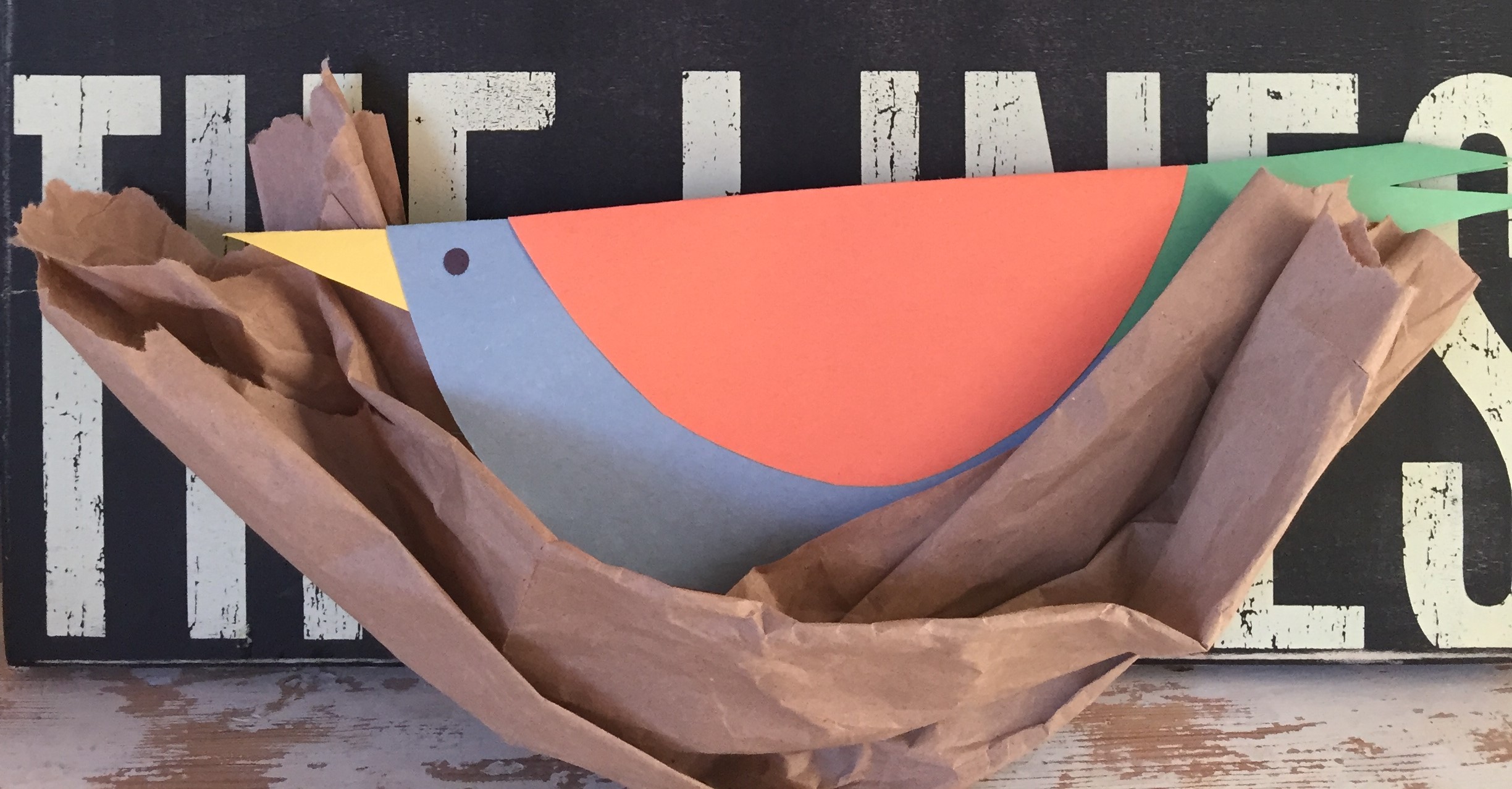
    Copy of bird in nest completed

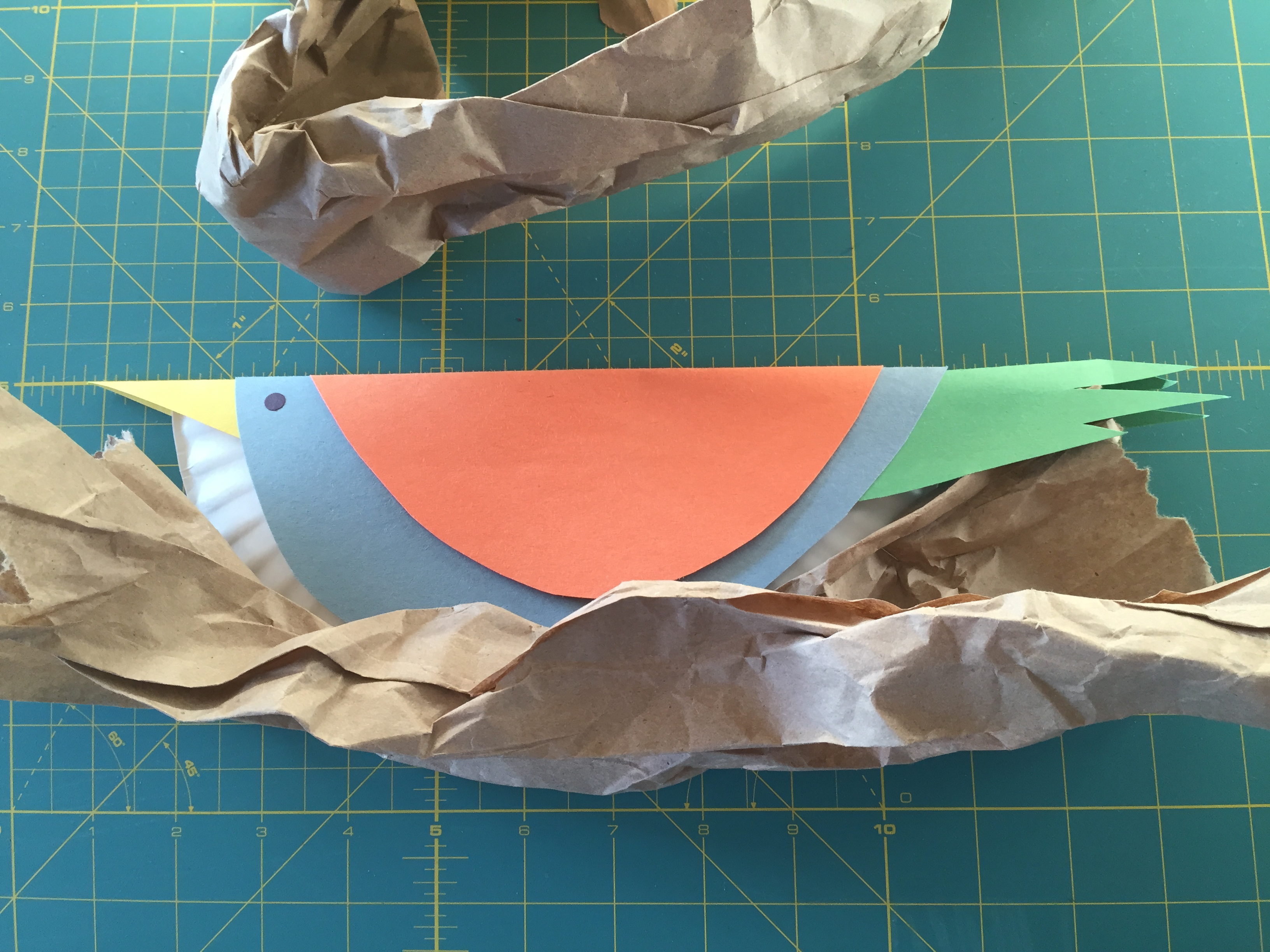
    To add my own spin, I created a simple nest for it to rest upon and to optionally provide a pocket for use as an Easter basket. I attached my bird to a half paper plate for sturdiness and to provide a surface on which to staple the nest's paper folds.

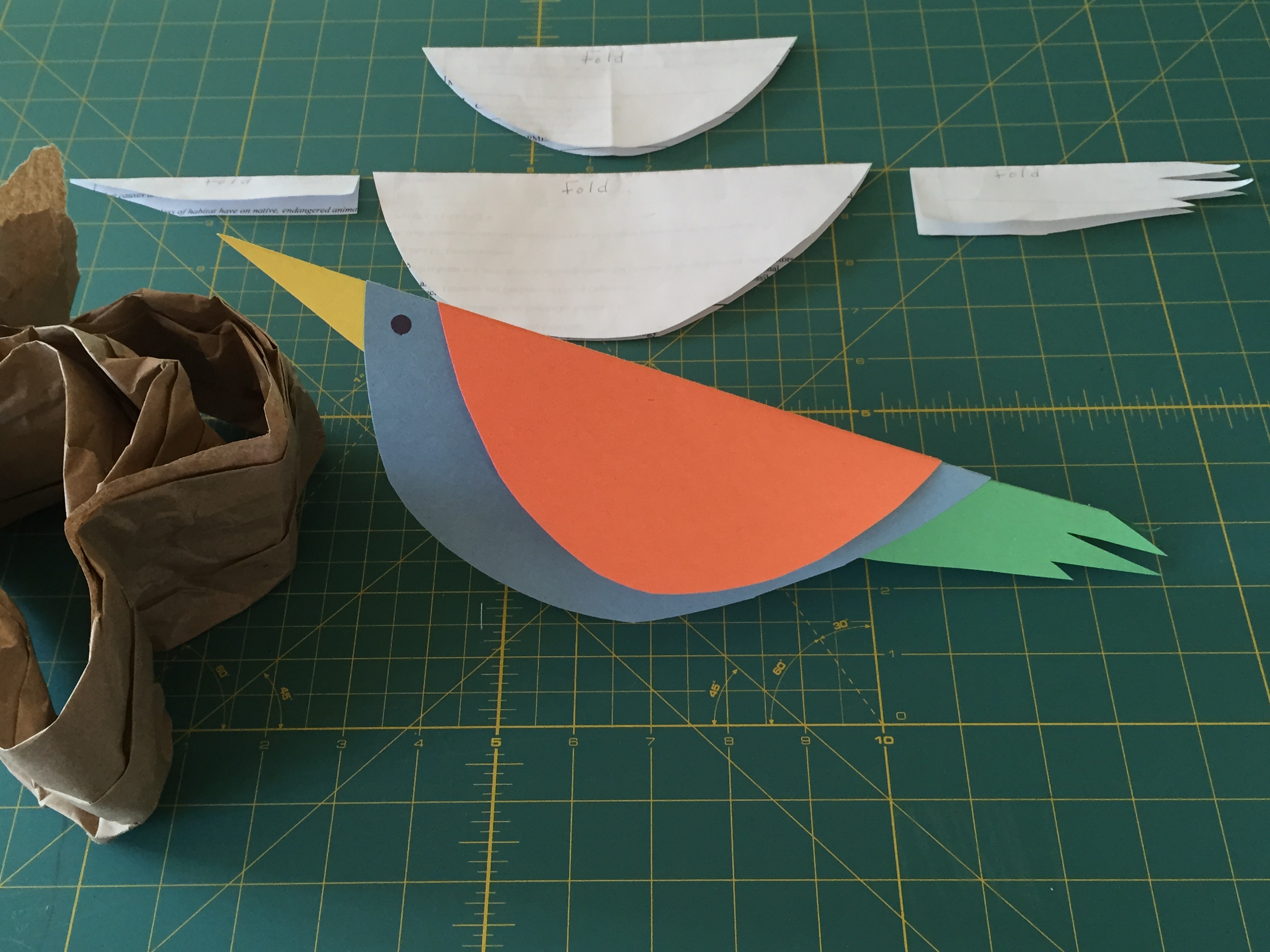
    Bird + nest supplies Attaching bird to paper plate

    First, I created patterns for the bird's body, wings, beak, and tail feathers by folding paper and drawing desired shapes and sizes then cut the shapes from construction paper. Next, I glued all bird pieces together except the front wing which allows you to reach under it with a stapler to secure all layers of the bird to paper plate. Finally, glue the front wing to bird's body to conceal the staple. 

    Forming bird nest Bird in nest completed

    Lastly, I used brown packaging paper that was wrapped around items in my Vitacost order to fashion a nest by stapling it around the edge of the paper plate.

    Eggs in nest Candy bird eggs

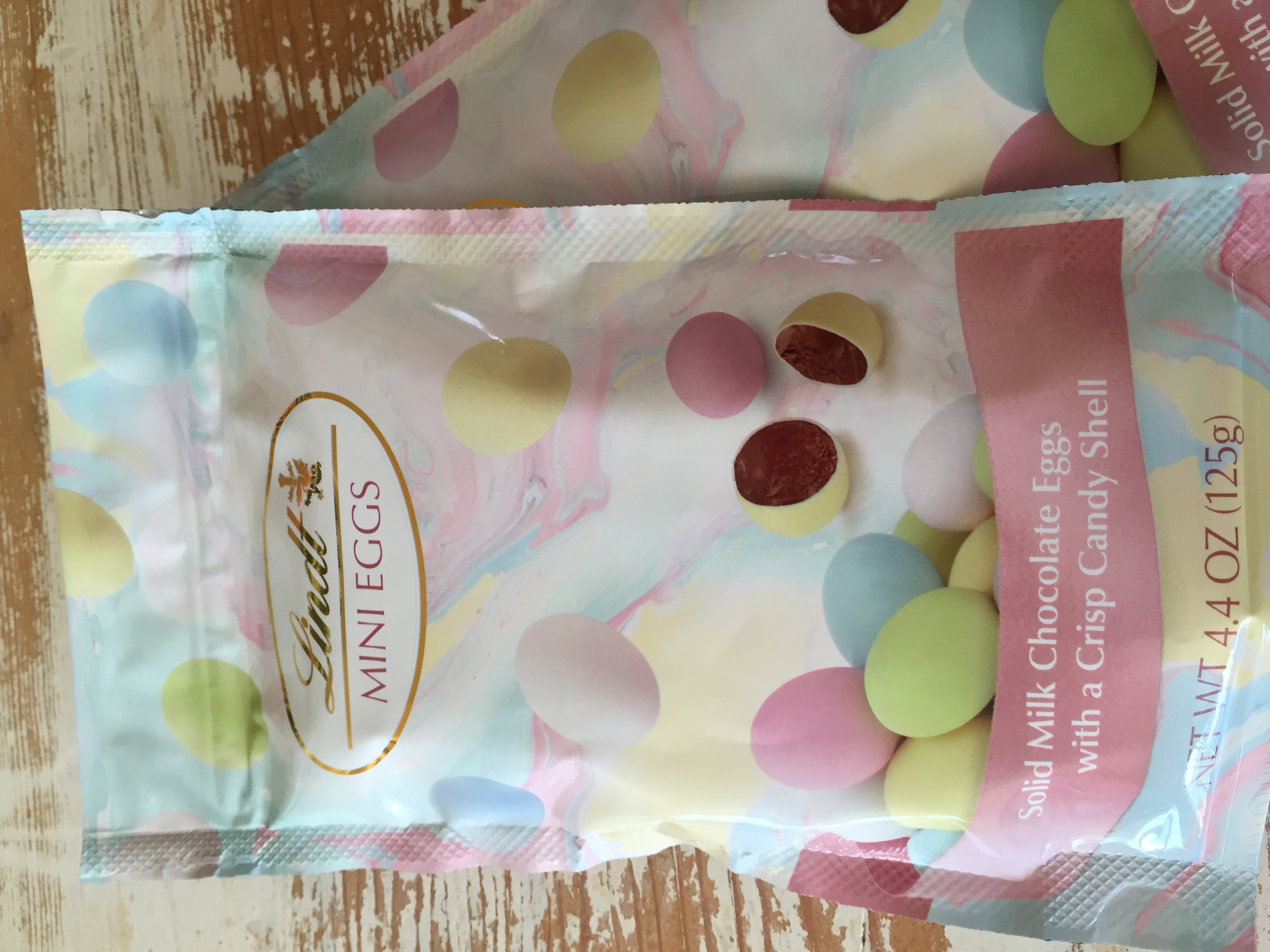
    If using for an Easter basket, I found authentic-looking bird eggs at Target. Lindt Mini Eggs Solid Milk Chocolate Eggs with a Crisp Candy Shell. After Easter, set out empty-nested bird for lovely spring decor.

  • A rabbit has become a regular visitor at our front door where it nibbles on tender young shoots of Dwarf Korean Lilac.

    Rabbit eating lilac shootsRabbit tracks front porch

    Upon following tracks across our front porch, it is evident that the rabbit's visitor status has transitioned to permanent resident.

    Tarped straw insulationStraw rabbit home

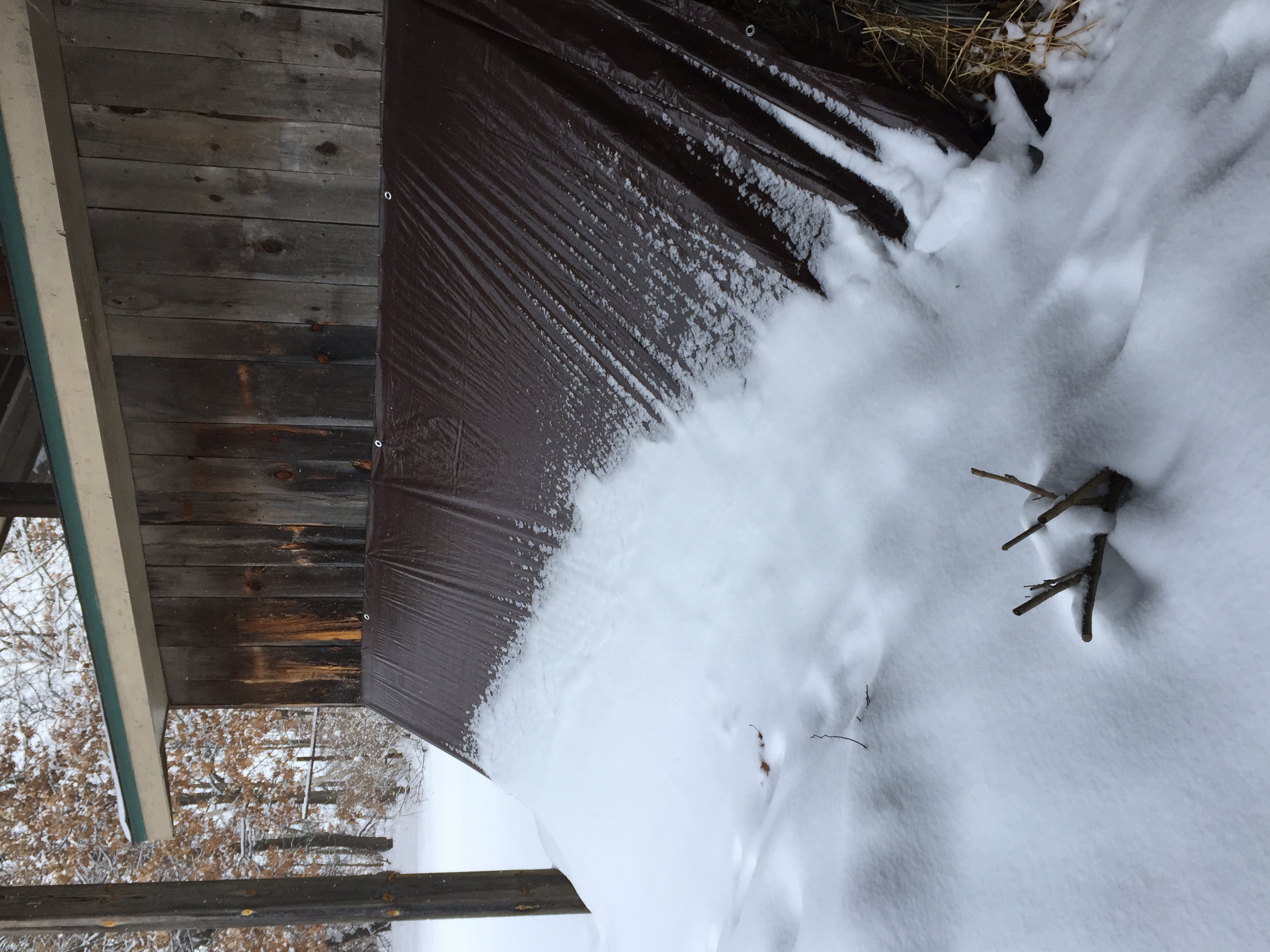
    Underneath a weatherproof tarp, straw is mounded along a wall of our exterior basement entry for insulation against the cold of winter. What a cozy winter home our rabbit has found!


  • In my childhood, we watched Leave It to Beaver, Father Knows Best, Casper the Friendly Ghost, and Bonanza on a black-and-white vacuum tube television…when it was working.

    Black and white tv leave it to beaver

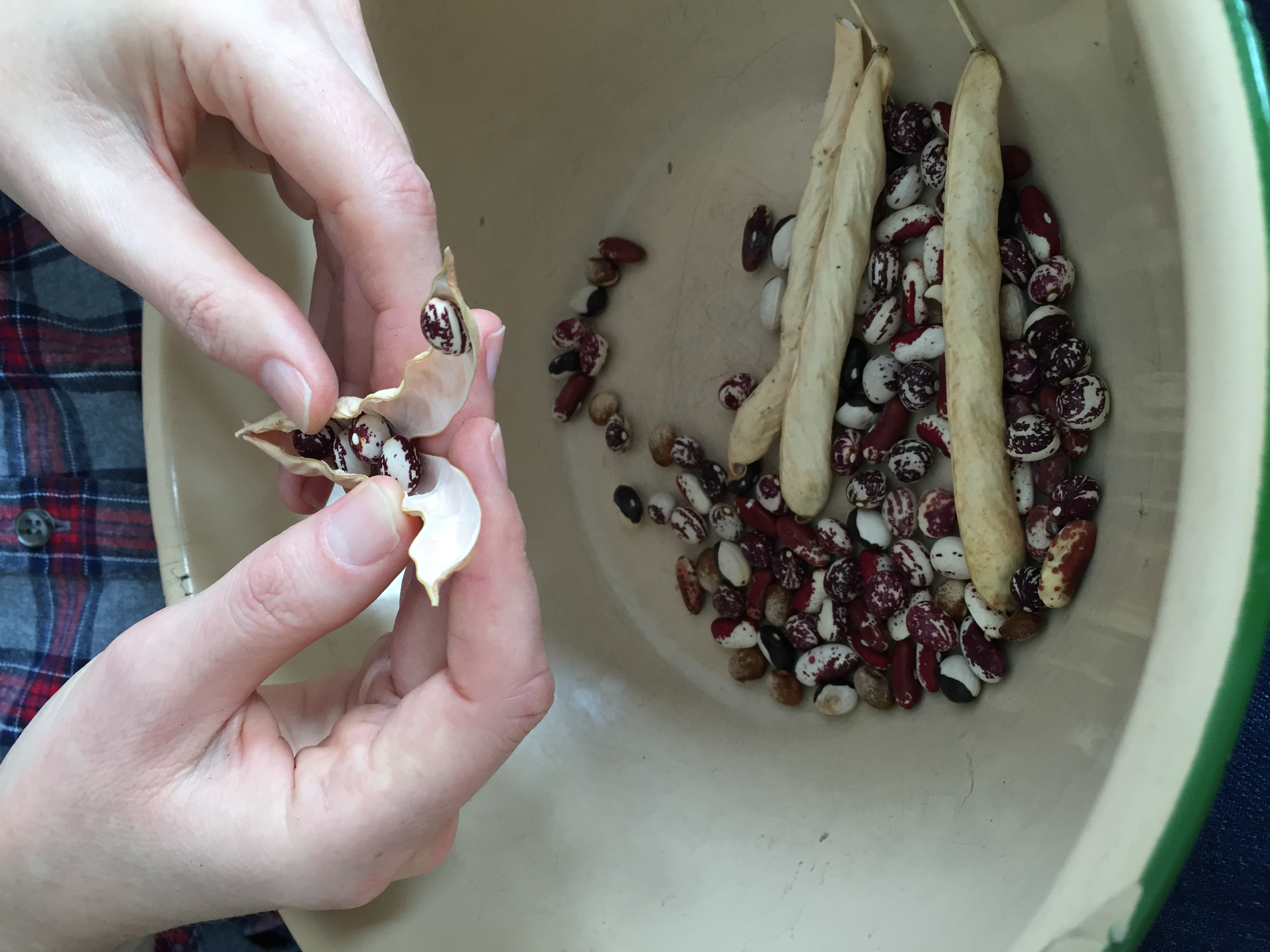
    On cold winter evenings, my family would cluster in our small living room to watch T.V. while shelling dry soup beans that we had grown and harvested from our large garden plot. Recently, our youngest daughter, Jessie, came for a visit. To shell beans from my garden and experience a memory from my lifetime so long ago. It was a tender moment in time.

    Shelling beansJessie shelling beans

    Sitting upon a shelf in my pantry, is a small jar of beans… shelled from pods growing on vines planted many years ago on my parents' farm when they were a thriving, viable source of nourishment for a family of twelve children. 

    Jar of old beans


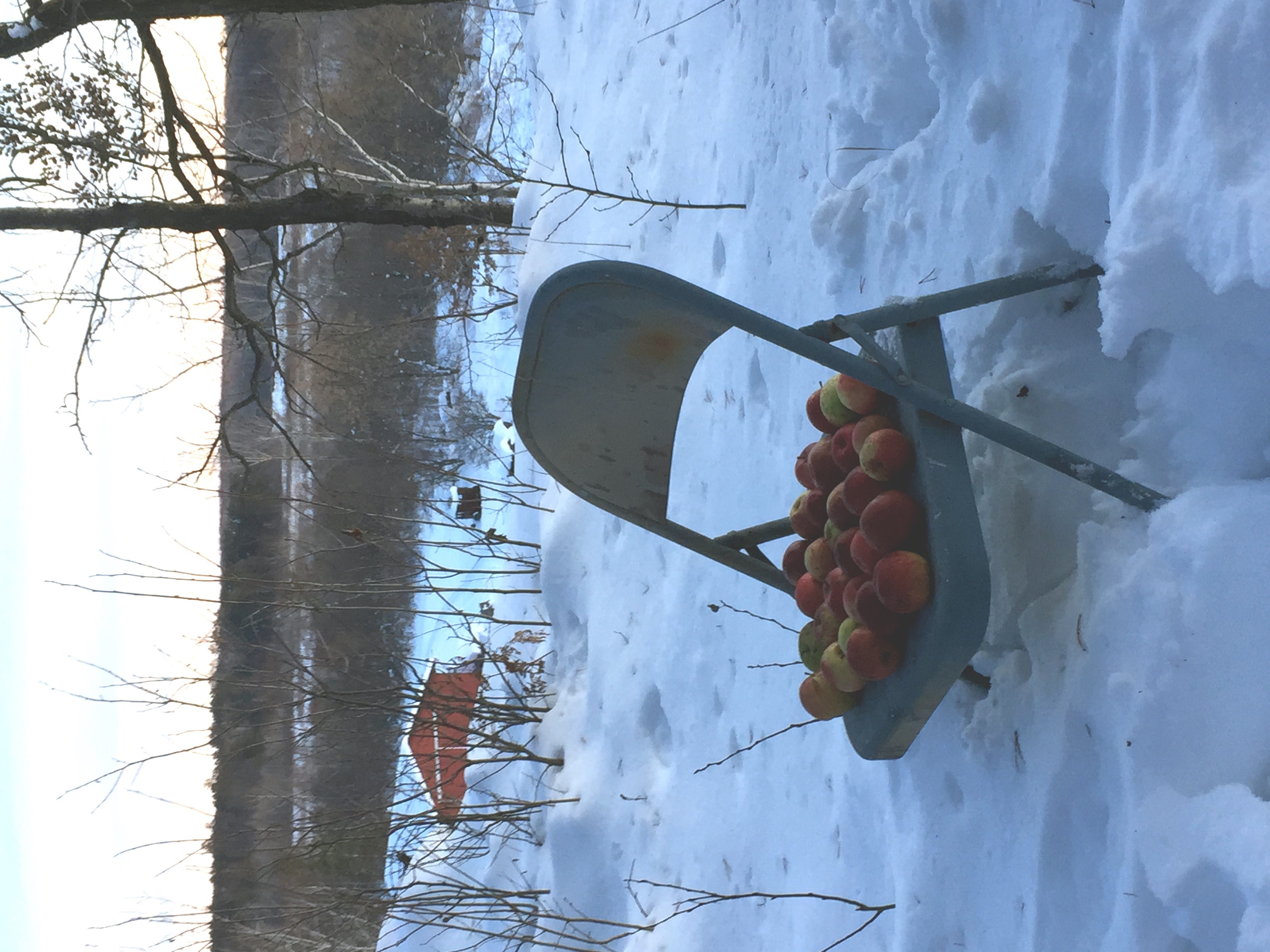
  • Three deer regularly visit our front yard to eat from a flowering crab tree heavily-laden with cherry-sized apples that determinedly cling to their branches despite winter's grip. Frustratingly, the deer believe that my perennials, shrubs, and young tree branches are free game, too. So, determined to retrain our visitors, Dick and I set some beyond-their-prime apples upon a chair along a pathway where we often sit. Far away from our house and the landscaping surrounding it.

    Deer applesApples eaten

    After checking twice each day, our efforts proved fruitful. On the third day, it was evident that the deer had conferred and agreed to each leave a snack for later, as there were but three apples remaining. Going forward, have we seen nary one deer in our yard? Did our kindness have a boomerang effect? I would like to report that our deer have not returned. But such would be a tale. One that gives hope to countless others. When hope is something I cannot give. Our experiment produced healthier deer. Nothing more. Their willingness to be retrained is hopelessly nonexistent.

  • Supplies are gathered. Freezer is stocked with collagen-rich bones. Here's what to do with them.

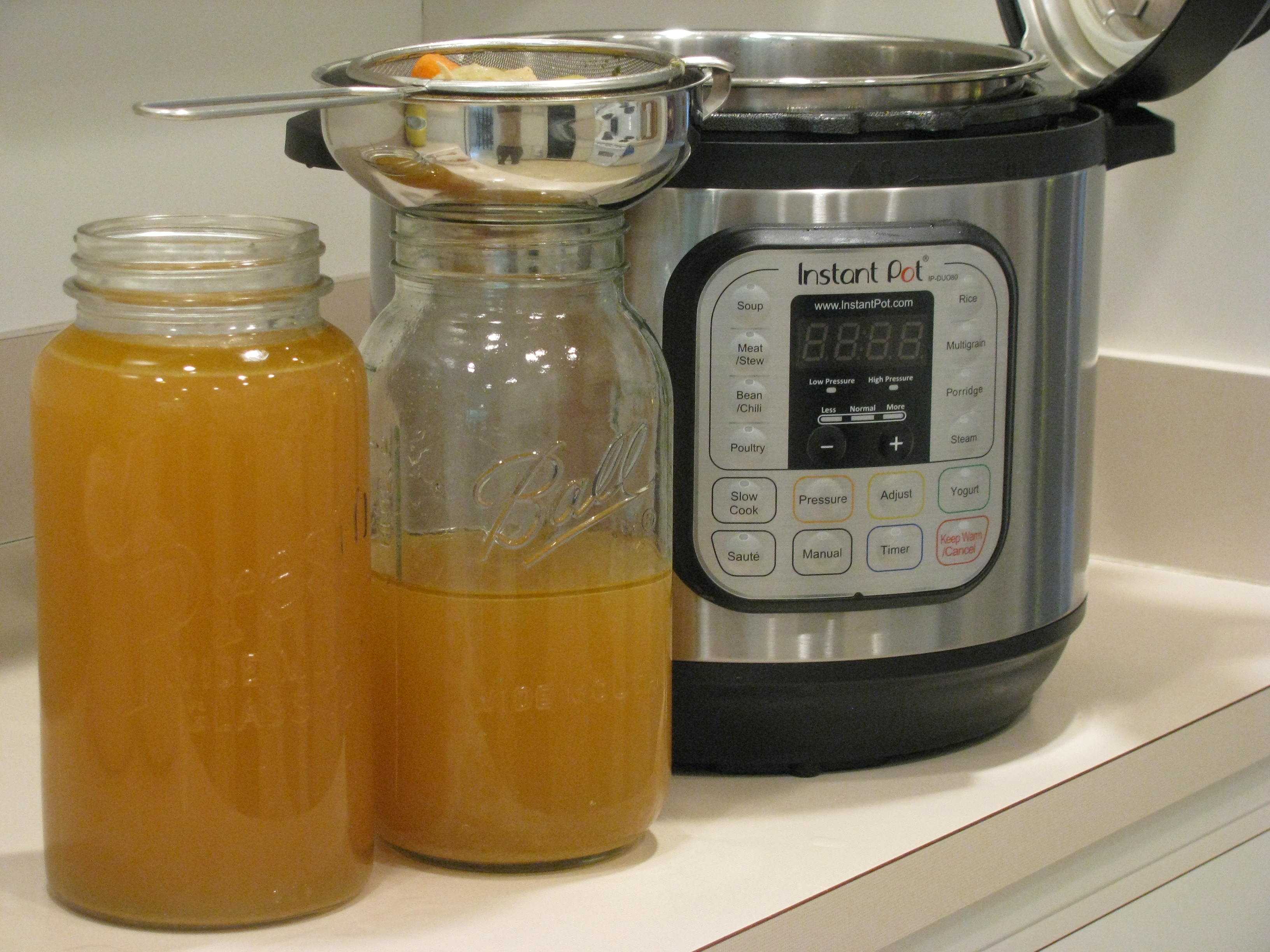
    Straining broth instant potBone broth gelled

    Instant Pot Bone Broth Instructions

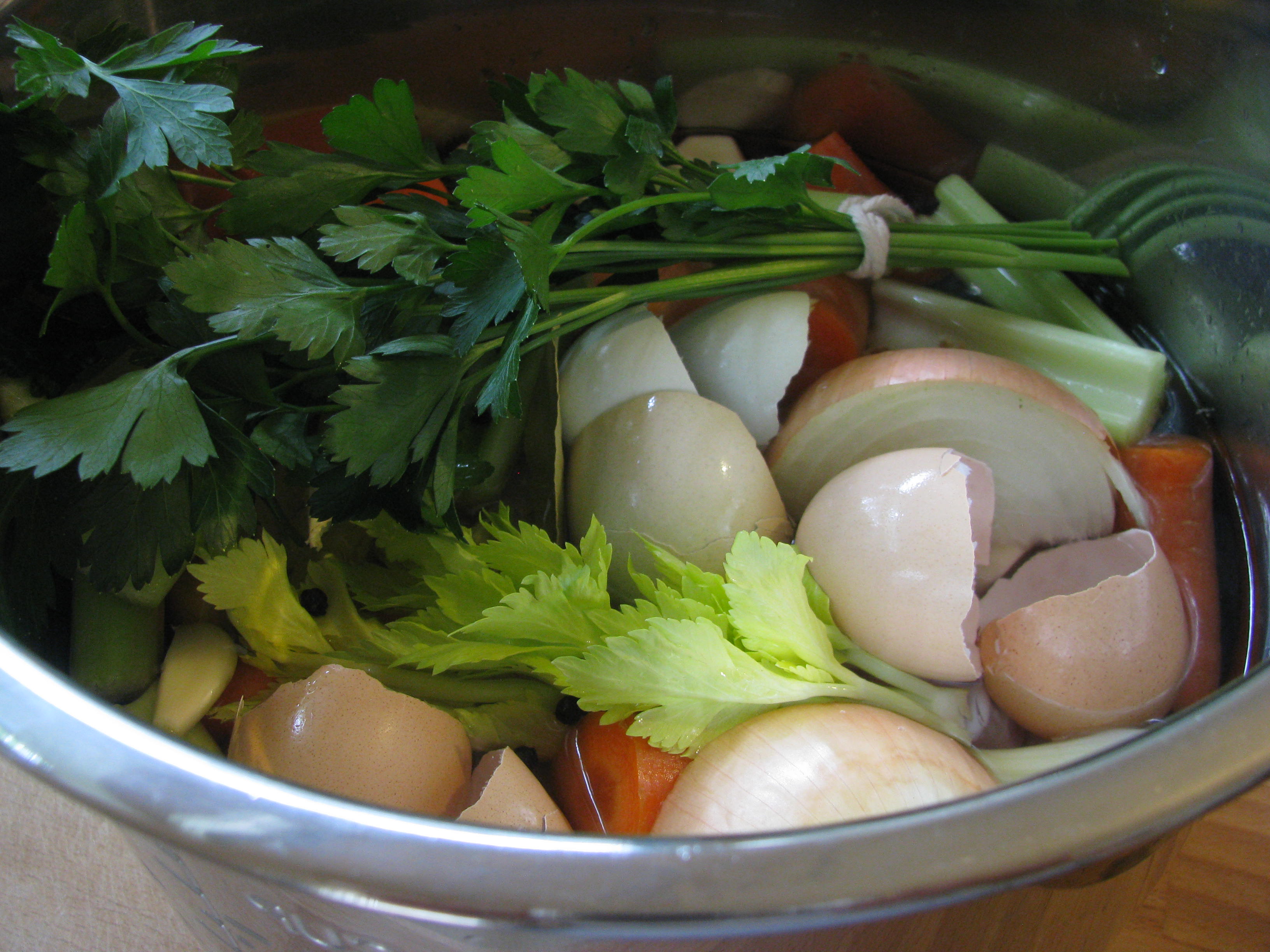
    Place bones in pot. Add vegetables, herbs, egg shells, and peppercorns. Mix vinegar with water and then pour over the ingredients in pot being careful not to spill any water in chamber under pot.

    Check to be sure that lid’s sealing ring is secure. Lock the lid onto Instant Pot and set the steam release valve to “sealing” position.

    Press the “soup” button, then set for *low pressure/normal mode by tapping the “pressure” button to reset to low pressure, and then tap the “adjust” button to reset to normal mode. Set time to 180 minutes by pressing the + or – button. It will take approximately 30 minutes for Instant Pot to come to full pressure at which time the red float valve will push upward to indicate that the lid is sealed and the timer will begin to count down. Note: Programs and buttons vary depending upon the Instant Pot model. *Some instructions state to cook at high pressure for 120 minutes. When the timer reaches 0, the pot will beep. Press “cancel” and allow the pressure to release naturally which will take approximately 30 minutes. If you get busy and don’t hear the beep to press cancel, the pot will go into “keep warm” mode and automatically begin depressurizing. Do not attempt to remove the lid until the red float valve drops downward to indicate it is safe to remove lid.

    Strain the broth into a two-quart canning jar. In addition, I often have enough broth to fill a peanut butter jar. If using the bones to make a second batch to which you'll add fresh veggies and a few additional new bones, scoop out vegetables first. I toss the veggies into my garden compost and place the bones, if reusing, into a container to store in fridge.

    Place strained broth in fridge overnight. After it has gelled, skim off the solidified layer of fat that forms on top. (Beef bones produce a greater amount and more solidified fat layer than chicken bones.) Discard, or use to grease pans for adding amazing flavor to fried foods.

    Keep a record of what combination of bones worked well so that it can be repeated.


  • If your bone broth is thickly-gelled like Jell-O, and even thicker yet so it doesn't even jiggle, you will know that you have perfected the process. It requires the correct amount of…

    • Collagen-rich bones
    • Water and vinegar
    • Cooking time

    "Animal bones, tendons, ligaments, and other flexible connective tissues in the body contain a protein called collagen. Collagen is the main (and most abundant) structural protein in the human body." Source: Kettle and Fire Bone Broth The animal parts that are used to make bone broth are the same ones that tend to break down in our body as we age (bone marrow and cartilage).

    Here's what you'll need:

    Chicken broth meat + veggies

    Bone Broth Ingredients and Utensils

    For Cooking Down Bones to release their collagen, there are 3 choices:

    • Pressure Cooker
    • Stove Top
    • Crock Pot

    My preference is a pressure cooker because, with the other two methods, additional water must be added to replace what is lost through evaporation. Therefore, flavor and collagen concentration is reduced. (I own an Instant Pot 8-quart IP-DUO8O Model).

    For Bones: In our central Minnesota locale, SuperOne Foods has a good selection.

    • Turkey and chicken: necks, backs, wings, the carcass after roasting a whole bird (for a turkey, portion into two parts and freeze half for later), chicken drumsticks (Costco family-pack sells for $0.79/lb or watch for sales at regular grocery stores), and chicken feet (Walmart sells 9 per Styrofoam tray).
    • Beef: Knuckles, femurs, neck bones, and oxtail (sometimes labeled "beef tail").

    Note: You will portion out the drumsticks into quart freezer bags w/ 4 per bag, then place those bags into a gallon freezer bag so that you can locate them more readily in the freezer. Likewise, portion the chicken feet into quart bags w/ 5 per bag, then tuck any stragglers leftover at end into the bags which will make 6 in a few bags rather than 5. Place each bag into a gallon freezer bag as you did with the drumsticks.

    For Veggies:

    • Celery
    • Carrots
    • Onion
    • Garlic Bulb w/ individual cloves to break off

    For Seasoning:

    • Dried or fresh parsley
    • Dried or fresh rosemary sprigs (adds amazing flavor- fresh if possible)
    • Whole peppercorns

    For Cooking Water:

    • Bragg Apple Cider Vinegar with the 'mother' to help draw collagen from the bones.

     For Straining:

    • Stainless steel wide-mouth funnel w/ handle (Suggested: Norpro Stainless Steel Funnel with Handle for Regular and Wide Mouth Jars available on Amazon)
    • Large mesh strainer to set inside funnel (a. not double-mesh, as it clogs too easily and b. It's advantageous for it to be taller than the funnel, as it holds more solids to expedite the straining process)
    • Long-handled soup ladle
    • Two-quart (8-cup) glass batter bowl with a lid and measurement markings to mix vinegar with water and store bones in fridge if using them to make a second batch of broth
    • One two-quart wide-mouth canning jar with lid
    • One peanut or almond butter jar w/ lid

    For Weighing Bones:

    For Record-Keeping:

    • Notebook to keep track of type of bones, weight, and combinations that worked well so it can be repeated.